
Risk analysis/risk assessment
Why it is needed
A risk assessment tells you which protective measures are actually needed, reduces the likelihood of serious events and is often a precondition for being granted a permit at all.
Beyond the Swedish Work Environment Authority's regulations, a risk assessment may also be needed to meet the regulations of the Swedish Civil Defence and Resilience Agency (Myndigheten för civilt försvar, MCF, formerly MSB) at plants that handle flammable goods. MSBFS 2020:1 is the main regulation for flammable gas and flammable aerosols, and MSBFS 2023:2 for flammable liquids (in force from 2024-01-01). The regulations have kept their MSBFS numbers since MCF took over responsibility. Which of them applies depends on which substance the plant handles, and we help you work out what is relevant for your particular plant.
What the service is
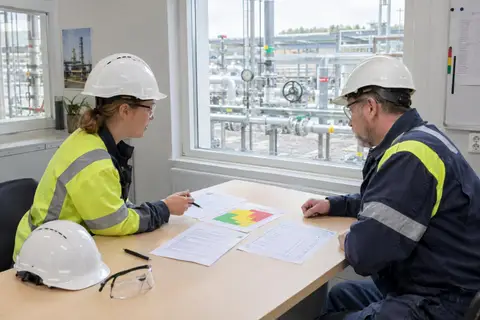
Businesses that handle gas, flammable goods or pressure equipment need a risk assessment in most cases – and that includes plants already in operation. The assessment must be kept up to date and reviewed when something changes and after incidents. We go through the plant together with you, identify the events that could occur and grade likelihood and consequence in terms of people, the environment and finances. The result is a clear report with an action plan you can actually work from.
Who is required to have this
Under 7 § lagen (2010:1011) om brandfarliga och explosiva varor (LBE, the Swedish act on flammable and explosive goods), anyone carrying out an activity that requires a permit must ensure that there is a satisfactory investigation of the risks of fire and explosion and of the consequences of such events. A permit is as a rule required for professional handling of flammable goods, or for handling them in larger quantities. The risk investigation is normally submitted in writing together with the permit application.
The regulations of the Swedish Work Environment Authority (Arbetsmiljöverket), AFS 2023:11, also require the employer to assess the risks of using pressure equipment and, for equipment in classes A and B, to have documented procedures for ongoing supervision.
Regulations that set the requirements
- LBE (2010:1011) – lagen om brandfarliga och explosiva varor (the Swedish act on flammable and explosive goods); requires a satisfactory risk investigation for activities that require a permit (7 §)
- MSBFS 2020:1 and MSBFS 2023:2 – MCF's regulations on the handling of flammable gas and flammable aerosols, and of flammable liquids, respectively
- AFS 2023:11 – Arbetsutrustning och personlig skyddsutrustning – säker användning (work equipment and personal protective equipment – safe use); 9 kap. governs the use of pressure equipment, including risk assessment and ongoing supervision
- AFS 2023:9 – Produkter – stegar, ställningar och viss annan utrustning för arbete på höjd, samt vissa trycksatta anordningar (products – ladders, scaffolding and certain other equipment for work at height, and certain pressure equipment); product requirements for pressure equipment not covered by the EU product directives, for example when items of equipment are assembled into a new unit
- SRVFS 2004:7 and AFS 2023:10 – the Swedish ATEX rules; require zone classification and documentation where an explosive atmosphere can form
- The Seveso legislation – requires the risks of major chemical accidents to be identified and analyzed, and for upper-tier establishments presented in a safety report; structured methods such as HAZOP and LOPA are established ways of showing this
This is a guide and does not replace checking the current consolidated legal text, permit conditions or municipal practice.