HAZOP studies
Why it is needed
- An established method – structured methods such as HAZOP are industry practice for showing that the risks in a process have been identified, for example in the safety reports of Seveso establishments
- Catches risks early – identifies deviations and combinations of events leading to accidents that are easily missed in an ordinary review
- A better basis for decisions – a clear prioritization of measures based on likelihood and consequence
- A deeper picture of the risks – captures interacting failures between equipment, control systems and human action that a simpler review often misses
- Strengthens the safety culture – brings operations, maintenance and projects together around a shared picture of the risks
- Pays off in the long run – fixing a flaw on the drawing board almost always costs less than an incident or a production shutdown
What the service is
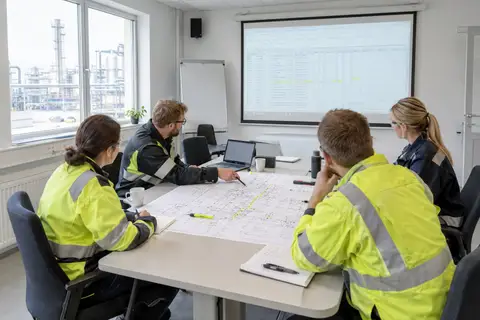
HAZOP is a structured, well-established method (according to IEC 61882) for systematically identifying risks and operability problems in a process or plant. A cross-functional team works through the process together, section by section, and applies standardized guide words – for example no, more, less, as well as, part of, reverse and other than – to capture conceivable deviations, their causes and consequences, and the safeguards already in place.
The method is used widely in the gas, chemical, energy and process industries, and is particularly relevant for Seveso establishments and plants with complex gas systems, where a simpler risk analysis is rarely enough to capture every interacting failure.